The Hidden Parasite Lurking in Lakes and Rivers That Can Sickening Your Dog


A dangerous freshwater parasite showing up in U.S. dogs, researchers caution
By: Texas A&M University College of Veterinary Medicine & Biomedical Sciences
Last Updated:March 25, 2026
For plenty of dogs, nothing beats a romp in a lake, pond, or stream. Yet in parts of the United States, that freshwater play carries a quiet hazard — a parasitic flatworm named Heterobilharzia americana.
Once thought rare and pinned to a small region, fresh research suggests H. americana may turn up more often — and across a wider area — than anyone realised.
As the weather warms and owners head outdoors with their dogs more often, Dr. Kathleen Aicher, an internal-medicine assistant professor at Texas A&M College of Veterinary Medicine and Biomedical Sciences (VMBS), and Ph.D. student Dr. Lea Poellmann — both with the VMBS Gastrointestinal Lab (GI Lab) — spell out what owners should know to shield their dogs as the pair works to map the parasite and its rising toll.
“It's really just unseen danger. It just goes through the skin.”
Dog Parasite Alert: Heterobilharzia Americana Spreading Through U.S. Freshwater
H. americana is a trematode, or flatworm, that lives in the blood vessels draining the digestive tract.
Unlike the familiar gut worms that dwell inside the GI tract, H. americana hides in blood vessels and sheds eggs that travel through the intestinal wall. Some eggs leave in stool, but others lodge in organs like the liver or pancreas, where they stir up inflammation.
Dogs pick it up through freshwater contact, since the parasite must first mature inside certain freshwater snails before it can infect animals. Once ready, tiny larvae slip through a dog's unbroken skin while swimming or wading — no bite or cut needed.
“It's really just unseen danger,” Poellmann said. “It just goes through the skin.”
Wild animals also carry the parasite, helping keep it alive in the environment.
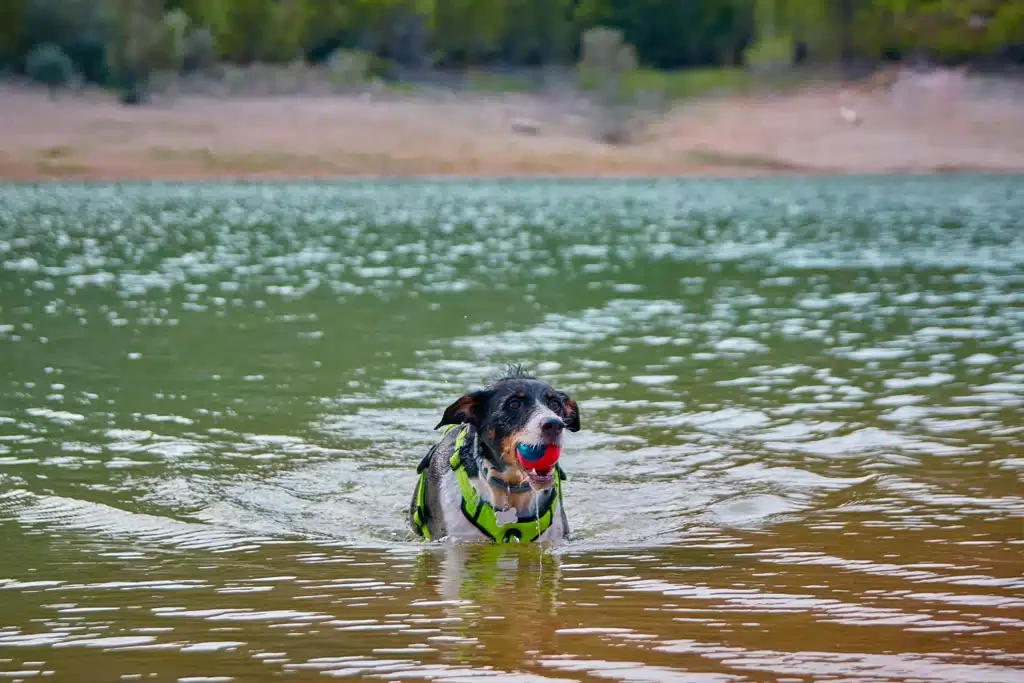
Where the Parasite Shows Up
Historically, H. americana tracked mainly with Gulf Coast and South Atlantic states. Yet recent VMBS studies found surprisingly high infection levels in some dog groups.
In parts of the Southwest — including towns along the lower Colorado River basin — the team logged rates near 24%. In certain Texas dog groups with water contact, rates reached about 28%.
“This prevalence is unexpectedly high for a parasite that was basically unheard of in the Southwestern United States,” Poellmann said.
Crucially, infection isn't confined to classic “water breeds,” a result that upended earlier guesses about who's most exposed.
“We've documented this in breeds you just wouldn't expect,” Aicher said. “French bulldogs, Chihuahuas, Boxers, mixed breeds — little dogs, puppies, adult dogs.”
Signs Can Be Mild—or Serious
One tough part of H. americana is how unevenly it hits dogs.
Some infected dogs show no clear signs and host the parasite silently. Others fall clearly ill.
Heterobilharzia Americana in Dogs: Symptoms
When signs appear, they can include:
“We don't really know what the deciding factor is between a dog getting really sick from this and a dog being OK,” Poellmann said.
In some cases, inflammation from wandering eggs can touch several organ systems. Left unchecked, severe cases can turn life-threatening.
Diagnosis and Treatment
Standard fecal exams done at most clinics miss H. americana. You need specialised testing — PCR and fecal sedimentation — to catch it.
Treatment usually pairs two anti-parasitic drugs — praziquantel and fenbendazole.
“The problem is that we need really high doses of praziquantel, much higher than those used for more common parasites,” Poellmann said. “That can make dogs that are already feeling sick feel even worse.”
Giving several pills multiple times a day is also hard, especially when a dog is already under the weather. Since treatment is demanding, catching it early matters most.
Prevention: What Owners Can Do
Right now, no approved preventive reliably guards dogs against H. americana.
Cutting contact with freshwater known or likely to hold the parasite lowers the risk. Skipping freshwater entirely may be impractical, but knowing the danger lets owners choose wisely for their dogs.
For dogs that swim or wade a lot — above all in places where the parasite is confirmed — routine screening may be the safest bet.
“If you do have a dog that goes in the water, we would recommend testing your dog,” Poellmann said. “Detecting infection early is the safest way right now to protect our dogs.”
Testing every four to six months can fit high-risk dogs, depending on location and water exposure.
With backing from the AKC-Canine Health Foundation, the VMBS team keeps studying how H. americana spreads, why some dogs crash while others stay fine, and how to build better prevention.
Aicher said the group has come far in naming the parasite as a growing worry and now centres on prevention, better treatment, and teaching both owners and vets.
With more awareness and early testing, dog owners can still enjoy time by the water while guarding their pets' long-term health.
Try this care rhythm
four small steps from the spa’s notebook
Book a vet check before starting anything new and demanding.
Warm the room first - a calm, quiet space helps a dog settle.
Keep the session to five gentle minutes, then a rest.
Reward the smallest right answer, then raise the bar one paw at a time.