Scottish Deerhound vs. Irish Wolfhound: What Sets These Look-Alikes Apart?
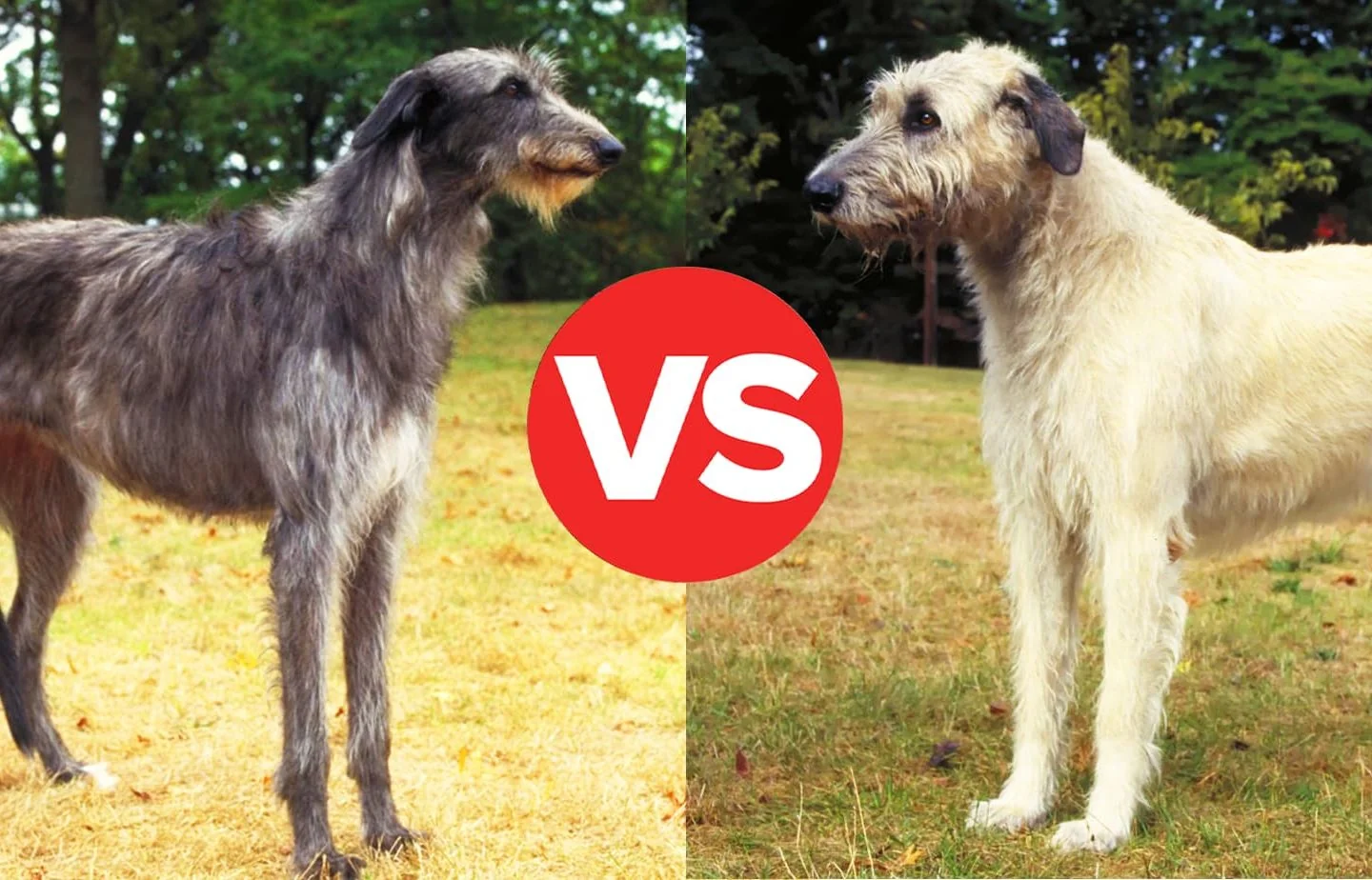
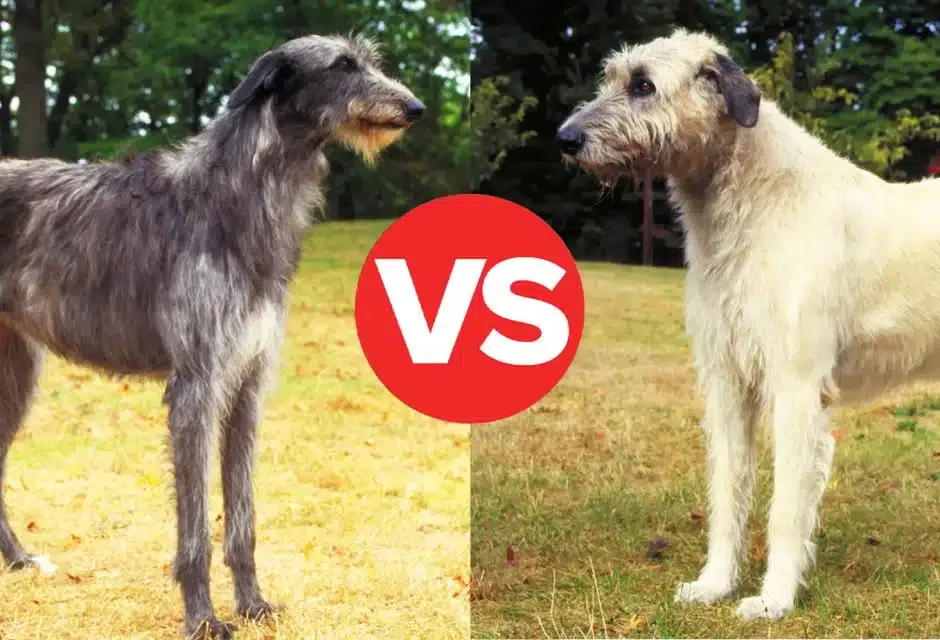
Get the real story on how these near-twin breeds differ. Spot the telling gaps in looks, temperament, background, and more between the Irish Wolfhound and Scottish Deerhound.
Last Updated:February 11, 2026
Though they look a lot alike, these easy-to-mix-up breeds hold some key contrasts. Here's where the Scottish Deerhound and the Irish Wolfhound part ways:
Let’s take closer look at both breeds.
Mary Bloom/American Kennel Cub
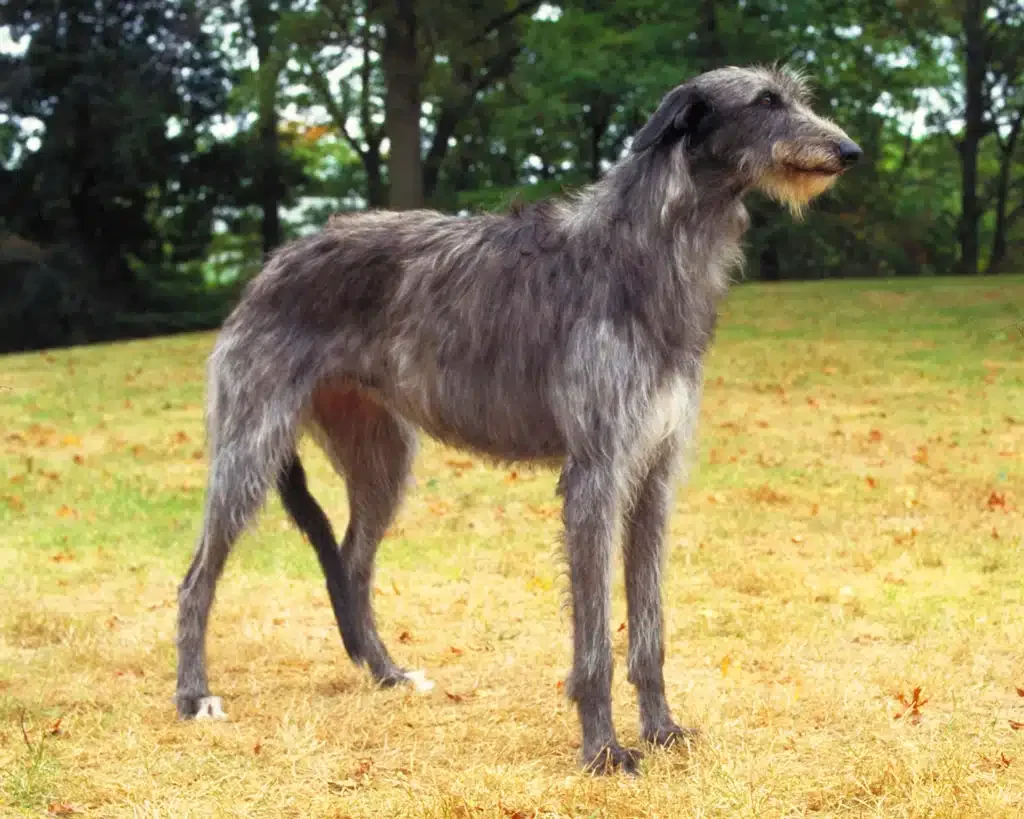
The Scottish Deerhound
Much like a bigger, furred Greyhound, the Scottish Deerhound is a sharp, watchful sight hound. One of the oldest breeds around, he owns top-tier hunting skill and shows up often at lure-coursing meets. The fur on body and neck is rough and wiry, while the coat on head, chest, and belly is far softer.
Known centuries back as the Scotch Greyhound, Rough Greyhound, and Highland Deerhound, the Scottish Deerhound became a clearly set breed in the 16th and 17th centuries. He was the top pick for chasing and taking down deer, and at the time none below an earl could own one. Though calm and dignified at home, the Scottish Deerhound may dart after any fuzzy critter that bolts by. So he should be walked on lead or let out in a fenced spot. His crisp, somewhat coarse coat, though, is a breeze to care for — just brushing and the odd bath. See their full breed profile here!
Mary Bloom/American Kennel Club
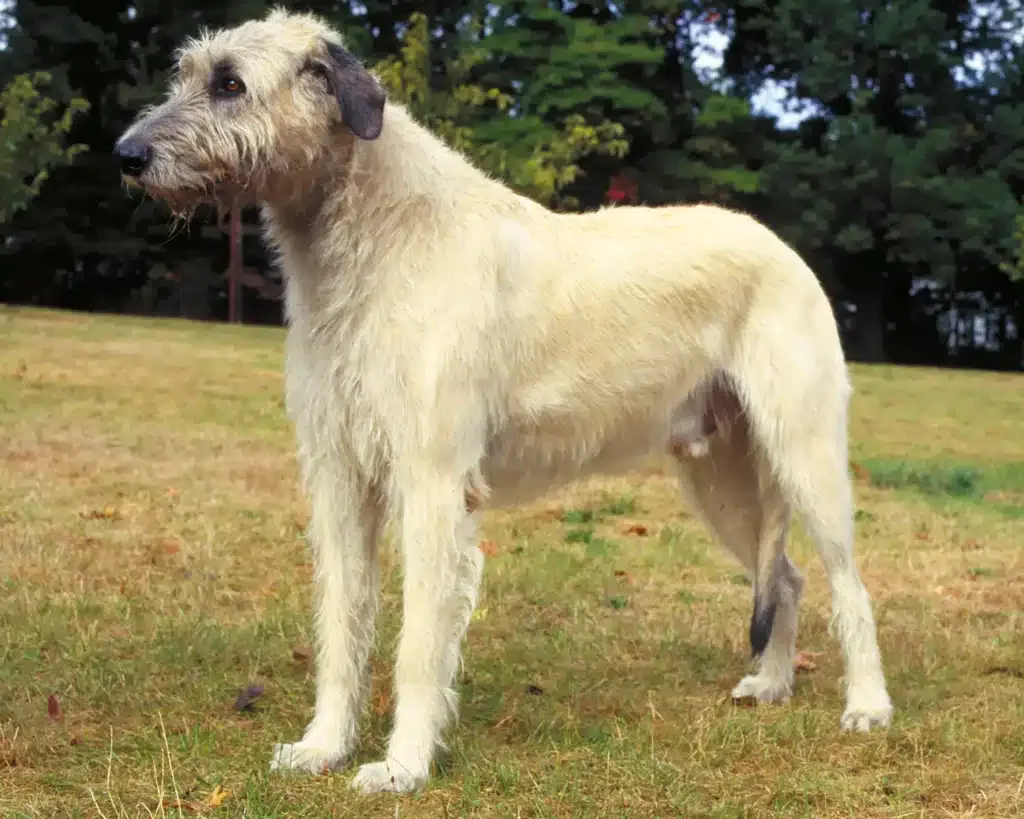
The IrishWolfhound
An Irish Wolfhound must read as huge and imposing. They carry a big, muscular, Greyhound-style frame and stand tallest of all dogs, though not the heaviest. A fine athlete and long-distance runner, an old Irish saying captures the breed best: “Gentle when stroked, fierce when provoked.”
Among the first written notes on Irish Wolfhounds sits in Roman records from 391 A.D. Often given as royal gifts, they hunted with their masters, fought at their side, guarded their castles, played with their kids, and rested quietly by the fire as family friends. They were fierce hunters of wolves and the giant Irish elk — so good, in fact, that their prey vanished from Ireland and the hounds fell on hard times. By the 19th century few Irish Wolfhounds remained in Ireland. Though mainly a family companion now, the Irish Wolfhound will still instinctively chase fleeing prey. His great size calls for more room, more exercise, and a bigger car. The breed's harsh, natural coat needs regular brushing. Read their full breed profile here!
At-a-Glance Differences Between the Scottish Deerhound & Irish Wolfhound
Size
Build
Coat
Temperament
Purpose
Lifespan
Exercise Needs
History
Recognition
Love these breeds? Many dog owners enjoy making personalized dog-themed apparel and gifts through spots like TeeDIY.
» Read Your Breed. For more breed profiles, go to moderndogmagazine.com/breeds
Try this care rhythm
four small steps from the spa’s notebook
Book a vet check before starting anything new and demanding.
Warm the room first - a calm, quiet space helps a dog settle.
Keep the session to five gentle minutes, then a rest.
Reward the smallest right answer, then raise the bar one paw at a time.